
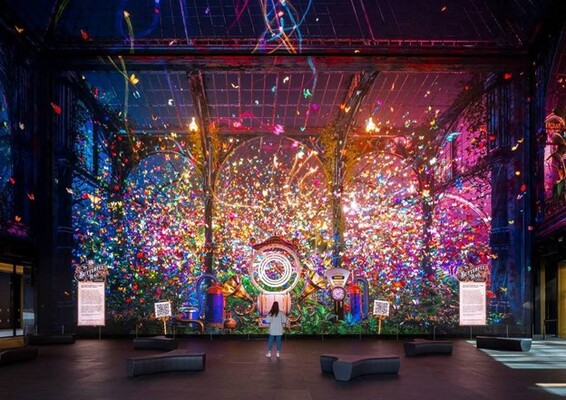
Outernet London has reintroduced The Butterfly Trail, a mixed reality installation created by Pixel Artworks, for a limited seasonal run. The project highlights how large-format digital environments and interactive technologies are shaping new directions in visitor experience design. Positioned within the Now Building, the installation uses Outernet’s high specification screens to present a fully digital botanical setting populated with responsive butterflies that react to visitor input.
Large Scale Digital Infrastructure As A Creative Platform
The Butterfly Trail uses Outernet’s wraparound floor-to-ceiling screens, which are among the most technically advanced permanent displays currently available. These screens form the core infrastructure that enables designers to build environments with depth, movement and audience interactivity. Pixel Artworks developed the trail as a narrative-led sequence that guides visitors through a fictional botanical workshop and glasshouse created by the character Professor Peter Pelgrin.
Visitors can use their smartphones to release digital butterflies, trigger animations and interact with augmented reality elements. The scale and resolution of the display allow these interactions to be seen across the full interior, which is central to achieving cohesion between the physical space and digital content.
Creative And Technical Collaboration
Outernet London reported that its work with Pixel Artworks continues to expand the organisation’s mixed reality output. Leadership at the venue described Pixel Artworks as a specialist in combining visual design with responsive technology and stated that the partnership supported Outernet’s ambition to position the installation as a global first within a cultural setting of this scale.
Pixel Artworks indicated that the return of The Butterfly Trail demonstrates how contemporary audiences are seeking more complex digital engagements, and that the project gave the studio room to push its creative and technical capabilities. The team also stated that seamless integration of augmented reality within built environments is becoming an important consideration for designers planning next-generation experiences.




Sector Value And Operational Context
Outernet London has now become one of the most visited cultural attractions in the UK, surpassing several established national museums. Its programme relies heavily on digital content that can be refreshed, adapted and reformatted to suit different seasons or cultural moments. The Butterfly Trail serves as an example of how operators can maintain year-round interest by commissioning content that fits both entertainment and cultural briefs.
For the B2B community, the installation provides a strong reference point for mixed reality deployment at scale. It demonstrates the operational advantages of high-capacity digital spaces, particularly when combined with modular storytelling and mobile-driven visitor interaction. It also showcases the degree of coordination required between content studios, hardware specialists and venue teams to manage real-time triggers, sightlines and audience flow.
Implications For Future Experience Design
The project points to continued growth in experiential formats that merge physical architecture with digital narratives. It underscores the rising demand for installations that allow visitors to influence their surroundings through simple, accessible inputs such as smartphone prompts. As mixed reality capabilities mature, suppliers and operators can expect increasing interest in installations that rely on both visual impact and interaction driven engagement cycles.
The Butterfly Trail’s return indicates that London audiences and international partners continue to respond to digital environments as a legitimate cultural medium, setting a reference standard for upcoming projects across attractions, public art and branded experiences.


